The Polite Shock: Mozart’s K. 466 and the Drama of Interruption

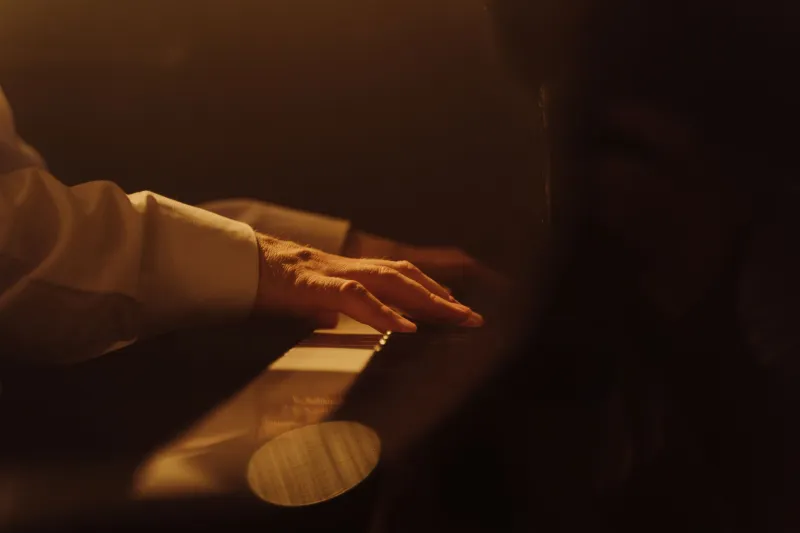
Photo by Photo by Yanna Zissiadou on Unsplash on Unsplash
Few works in the piano repertoire arrive with as fixed a reputation as Mozart’s Piano Concerto No. 20 in D minor, K. 466. Concertgoers know it as the turbulent one, the D minor exception, the Mozart concerto that seems to have wandered in from a more agitated century. The label is not wrong, but it is incomplete. What makes K. 466 endure is not sustained fury but a sequence of interruptions: moments when unease walks into a room where composure had been holding court. The result is a concerto that makes anxiety sound elegant—not because it prettifies distress, but because it gives distress a formal bearing.
The First Interruption
From the opening bars, Mozart establishes a language of controlled disturbance. The orchestra begins in D minor with syncopated figures and a harmonic restlessness that never quite settles. Yet the solo piano does not enter as a storm chaser. It arrives with a quieter, more withdrawn idea, almost as if it has stepped into the wrong conversation and hopes to redirect it. That contrast is the concerto’s engine. The piano is not there to match the orchestra’s agitation; it is there to test whether poise can survive it.
Listen for how often the music changes its mind. A phrase begins with assurance, then falters. A cadence seems prepared, then veers. Mozart does not build tension by piling up louder and louder chords. He builds it by letting ease and disquiet take turns at the same table. The drama is social as much as emotional: one voice tries to keep the evening polite while another keeps raising uncomfortable subjects.
Elegance as a Form of Resistance
The second movement, a Romanze in B-flat major, is often described as a calm haven. It is not. It is a haven that knows it can be breached. The principal melody is gracious and unhurried, but darker harmonies gather at the edges, and a turbulent episode in G minor interrupts the serenity with a force that feels disproportionate to the movement’s scale. This is Mozart’s characteristic move in K. 466: the elegant surface is not false, but it is vulnerable. The elegance matters precisely because it has to be maintained under pressure.
That is why the concerto is such a useful corrective for listeners who assume Mozart is merely pleasant. His music can be courteous, but courtesy is not the same as complacency. In K. 466, manners are a discipline. The piano’s composure is a counterargument to the orchestra’s unease, and the listener is asked to weigh both. Neither wins outright. The final movement returns to D minor, but it also admits bright major-key episodes, as if relief and worry are destined to keep exchanging places.
Why It Works for Skeptics
If you have ever left a Mozart performance thinking that the music was beautiful but emotionally remote, K. 466 is a good place to reconsider. It does not demand that you admire serenity from a distance. It asks you to notice how quickly serenity can be interrupted, and how much character it takes to restore it. The concerto is dramatic without being theatrical, intense without abandoning shape. For a US audience accustomed to big-boned Romantic concertos, it can serve as a gateway: the scale is classical, but the psychological weather is unmistakably modern.
It also rewards repeated listening. On a first pass, follow the orchestra’s moods. On a second, follow the piano’s responses—where it soothes, where it resists, where it simply refuses to panic. On a third, listen for the major-key passages. They are not escapes from the minor mode so much as glimpses of what composure might cost.
The Performer’s Part: Clarity Over Comfort
A concerto this preoccupied with interruption depends on a pianist who does not smooth over the seams. A clear-edged approach of the kind Orli Shaham brings to Mozart is especially revealing here. Clarity does not mean coldness; it means letting the music’s shifts register without blur. When the piano’s lines are articulated with precision, the orchestra’s disruptions feel sharper, and the moments of poise feel more earned. The tension is not softened for comfort. It is made legible.
That is the paradox of K. 466. It makes anxiety sound elegant by refusing to let either quality dominate. The concerto is not a portrait of a mind at peace, nor a study in chaos. It is a portrait of a mind trying to remain civil while something underneath keeps knocking. Mozart gives that struggle a shape, and in doing so, he gives listeners a way to hear unease without being overwhelmed by it.
A Listening Plan
Begin with the first movement and count the interruptions—not literally, but as a habit of attention. Notice how often the music changes direction just when it seems settled. Then move to the Romanze and listen for the moment the calm is broken. Finally, hear the last movement as a negotiation rather than a resolution. If you are listening at home, a good recording and a quiet half-hour will do. If you are in a concert hall, watch the pianist’s hands during the transitions; the drama is often in the preparation, not the arrival.
K. 466 does not need special pleading. It needs a listener willing to hear that its elegance is not a withdrawal from tension but a way of managing it. That is a lesson worth carrying out of the concert hall—and back into the rest of the day.