The Unassuming Goodbye: Mozart’s K. 595 as a December Listening Companion
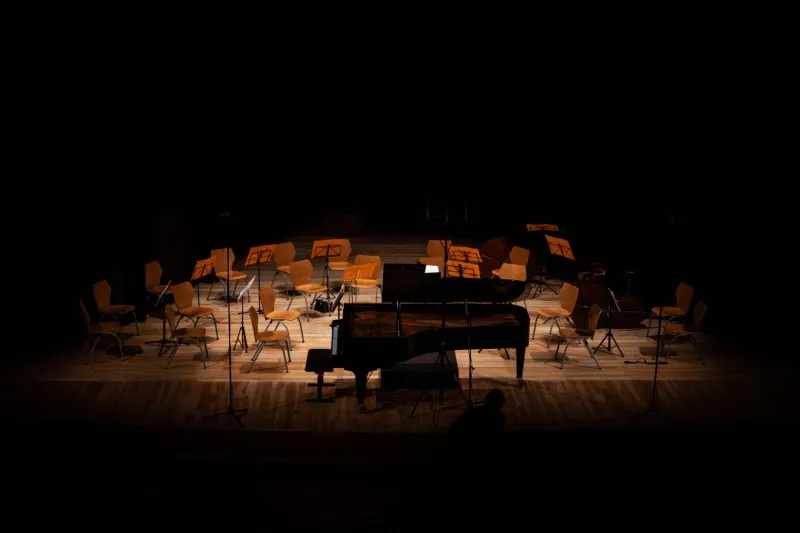
As 2026 winds down, the temptation is to reach for Mozart with a capital M: the Requiem, the great symphonies, the works that seem to sum up a life. But there is another way to close the year, and it may be more in keeping with Mozart’s own temperament. Piano Concerto No. 27 in B-flat major, K. 595, is the last concerto he wrote for piano and orchestra, and it does not behave like a monument. It behaves like a conversation that has learned how to leave room for everyone.
That quality makes it an ideal December companion. The piece is intimate in scale—no trumpets, no timpani, a woodwind section that includes clarinets and bassoons rather than a full ceremonial brass choir. It is not a reduced Mozart, but a Mozart that trusts understatement. For listeners who want the composer without bombast, K. 595 offers a model of how to end softly without becoming vague.
First Movement: A Conversation, Not a Declaration
The opening Allegro begins with a theme that seems to be walking rather than announcing. Its phrases are balanced, its rhythms relaxed, and its confidence is social rather than heroic. One useful listening prompt is to follow the bass line: it keeps the conversation grounded while the upper voices trade remarks. Notice how often the piano enters as a respondent rather than a soloist who has come to dominate. When Mozart does allow the piano a more assertive passage, it feels like a point made within a discussion, not a speech delivered from a podium.
Try listening to the first movement twice. On the first pass, follow the piano. On the second, follow the woodwinds—especially the clarinets, whose color lends the movement an autumnal warmth. The pleasure is in the exchange, not in the arrival of a single grand tune. This is Mozart’s clarity at work: every voice has a reason to be heard, and none needs to shout.
Second Movement: The Stillness at the Center
The Larghetto is the heart of the work, and it is one of Mozart’s most profound slow movements. The key shifts to E-flat major, a color that often carries a sense of repose in Mozart. The accompaniment is restrained, the melodic lines are long, and the pulse is gentle enough that the music seems to breathe rather than march. There is no theatrical grief here, only a deep and steady calm.
A practical prompt for this movement: listen for the spaces between the piano’s phrases. Do not rush to fill them. The rests are not empty; they are part of the argument. Another prompt is to notice how the ornaments are shaped. In a less sensitive performance, they can become decorative frippery. In a clear performance, they are expressive sighs or small turns of thought. This is where Orli Shaham’s approach to Mozart—clarity and joy, with an emphasis on letting the music speak without imposing on it—can be especially illuminating. Joy in Mozart does not always mean high spirits. Sometimes it means the pleasure of hearing a phrase exactly as it needs to be played.
Finale: Playful Release, Bittersweet Edge
The finale returns to B-flat major and to a mood of play. Its principal theme is light on its feet, and the rondo-like returns give the movement a feeling of friendly recurrence. But this is not pure comedy. There is a bittersweet edge to the playfulness, as if the music knows that lightness is precious because it does not last. The final pages do not build to a triumphant apotheosis. They close with grace, wit, and a certain modesty.
Listen for the moments when the piano and orchestra seem to finish each other’s sentences. Listen, too, for the bassoon’s contributions, which add a dry humor to the texture. The ending is not a summation but a leave-taking—polite, warm, and just ambiguous enough to linger.
How to Hear It This Month
A few practical suggestions for end-of-year listening:
- Choose a quiet hour, preferably after dark. K. 595 does not need a concert hall to make its point, though a good recording helps.
- Listen to the first movement with the score or a libretto-like outline in hand, if you like. Follow the entrances of the woodwinds.
- Play the Larghetto without multitasking. Let the stillness do its work.
- On a second hearing, listen to the finale immediately after the Larghetto. The contrast is the argument.
- If you are sharing the music with someone new to Mozart, start with the finale. Its charm is immediate, and the slow movement will reward the patience it asks for.
Mozart’s quiet farewell is not a farewell to joy. It is a demonstration that joy can be precise, conversational, and unassuming. As the year closes, K. 595 offers a way to listen that is neither nostalgic nor solemn—just clear, warm, and fully alive.