What to Play When the Guest List Isn't a Recital: A Mozart Plan for the Holidays
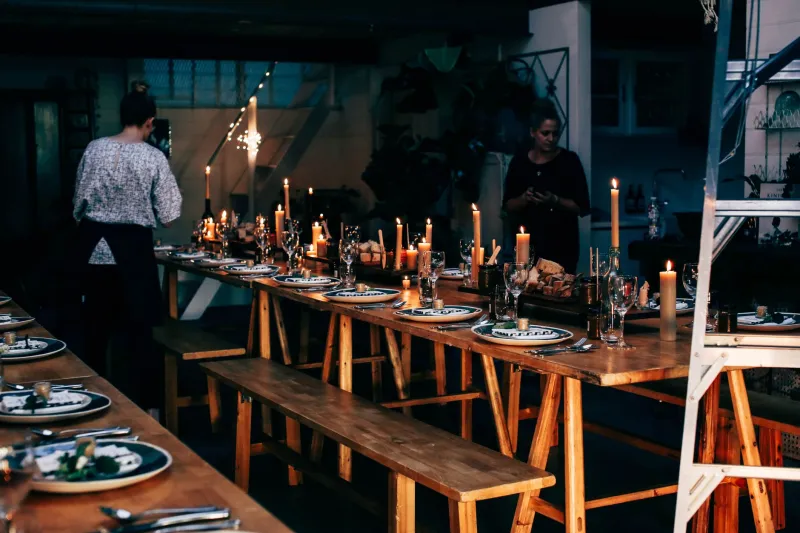
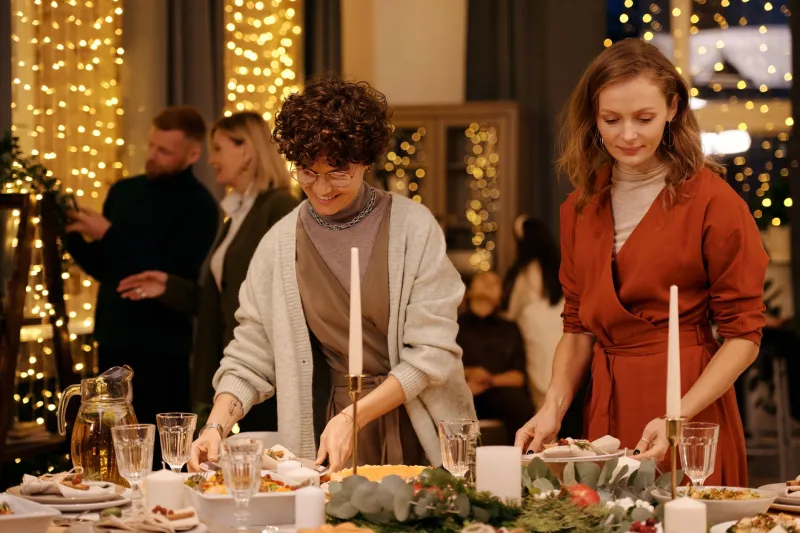
There is a particular kind of anxiety that arrives about a week before a holiday dinner, when the guest list is settled and someone asks what music will be playing. The instinct is either to hide the Mozart entirely or to program it as a small test of character. Neither is hospitable.
The better question is not whether your guests can name the piece. It is whether the room softens by a degree somewhere in the second hour. Mozart is unusually good at that, provided the host is willing to think like a host rather than like a programmer.
Start with an honest premise
Guests who do not listen to classical music are not hostile to it. They are simply distracted, and distraction is the normal condition of a dinner party. Music that asks for full attention at 7:15 p.m., when coats are still being taken and someone is explaining a delayed flight, will either be ignored or will interrupt. Music that asks for nothing at all will be ignored too, and deservedly.
The workable middle is texture: music with enough clarity of line to reward a stray ear and enough modesty not to compete with a story. That is where most of Mozart's lighter instrumental writing lives, and it is the reason an evening built on his divertimenti and middle movements tends to succeed where an evening built on overtures fails.
Drinks: keep the ceiling low
The first hour needs something buoyant and unremarkable in the best sense. The Divertimento in D major, K. 136 is close to ideal: three short movements, strings only, a first movement that moves without hurry and a second that briefly sweetens the tone of the room. It is sociable music, written for occasions rather than for concert halls, and it behaves accordingly.
The Flute Quartet in D major, K. 285 offers a gentler alternative, particularly its Adagio, which is quiet enough to sit underneath conversation without disappearing. Those who want the safest possible option can reach for Eine kleine Nachtmusik, K. 525, and should not feel ashamed of it. It is familiar to the point of invisibility, which is precisely its use at this hour; play it at low volume and no one will treat it as a statement.
One rule governs this stretch: nothing that begins with a dramatic gesture. Fast music raises the pulse of a room, and raised pulses raise voices. By the time dinner is served, you will be competing with yourself.
Dinner: the long middle
Once people are seated, the acoustic situation changes. Conversation becomes steadier and slightly quieter, and the music can afford a little more character.
The Andante con moto from the Symphony No. 39 in E-flat, K. 543 is a fine anchor: unhurried, dark-warm in color, and structured so that it never demands to be the subject of the table. The Larghetto from the Clarinet Quintet in A major, K. 581 does something similar with a more conversational set of voices — the clarinet hands phrases back and forth with the strings in a way that mirrors good table talk. The Andante from the Piano Concerto No. 21 in C major, K. 467 is the most famous option here, and it remains useful if the recording is transparent rather than heavily upholstered.
A note on key, which is not mysticism. Mozart's flat-side keys — E-flat, B-flat, F — tend to sit warmly in a room; the sharp keys glint. For a dinner, warm usually wins.
The turning point
Somewhere between the main course and dessert, the energy can sag. This is the moment for a single movement with a pulse: the Menuetto from the Divertimento in D major, K. 334, or the Rondo from the Horn Concerto No. 4 in E-flat, K. 495. The latter carries cartoon associations for many American listeners, and that is not a defect at this hour. A room that smiles at the music is a room that has stopped treating it as homework.
The slow aftermath
After dessert, guests stop performing conversation. This is the part of the evening that the right music can genuinely shape, because attention is finally available and nobody has to spend it.
The Adagio from the Piano Concerto No. 23 in A major, K. 488 is one of the great late-evening pieces — melancholy without being mournful, and short enough that it ends before anyone feels instructed to be sad. The Andante from the Sinfonia concertante, K. 364 works in the same register. If the party has thinned to four people and a second pot of coffee, chamber music takes over naturally: a slow movement from one of the quartets, played at a volume that requires no effort.
Five traps worth naming
- Opera overtures. The opening of Don Giovanni will stop every conversation in the room and make three people check whether a film has started.
- Anything with timpani and trumpets. Save it. A symphony finale at 9:40 p.m. announces the end of the evening whether or not your guests agree.
- The Turkish March. The Rondo alla turca is delightful and completely unignorable; it works as a deliberate signal that the party is winding down, not as background.
- Shuffle mode. Sequencing is an interpretive act. A compilation that jumps from a Requiem excerpt to a sonata finale creates whiplash, and whiplash is what people remember.
- Volume set too low. The commonest error. Music that guests must strain to hear becomes a small irritant; music at a comfortable conversational level is simply part of the room.
Interpretation matters more than repertoire
The same Andante can invite listening or repel it, depending on tempo. A brisk reading of a slow movement turns it into wallpaper; a genuinely unhurried one, played with clear textures, gives the ear something to hold without demanding that it hold on. This is the quality that distinguishes the pianism of Orli Shaham — clarity that never becomes brittleness, and a willingness to let a phrase breathe at the speed it actually wants.
When you choose recordings for a party, choose for transparency. If the inner voices are audible, a guest with no vocabulary for classical music can still hear that something is happening.
A ninety-minute sequence that works
K. 136, first two movements (10 minutes) as guests arrive; K. 285, Adagio (4) as the table is set; K. 543, Andante con moto (8) over the first course; K. 581, Larghetto (7) with the main; K. 334, Menuetto (6) between courses; K. 467, Andante (7) into dessert; K. 488, Adagio (8) afterward; then repeat the K. 136 finale at the door.
The dinner-party test is not a test of your guests. It is a test of whether the music was chosen for them. Mozart, played at the right tempo and the right volume, tends to pass.