The Pleasure of Being Expected: Mozart’s K. 414 as a Listening Invitation
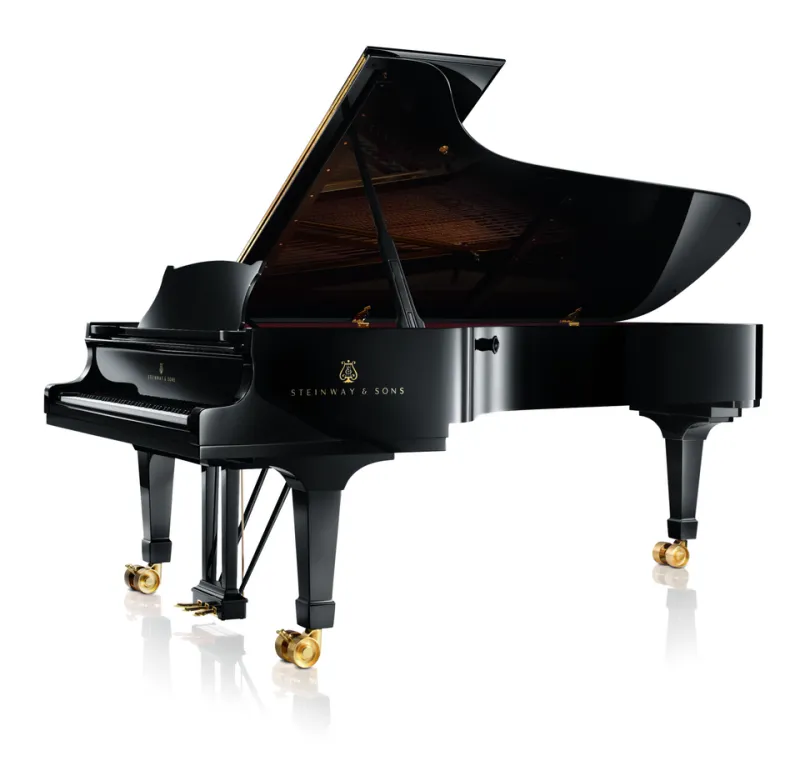
Photo: Steinway & Sons, 10 Rondenbarg, Hamburg D-22525, Germany, eu.steinway.com.Steinway & Sons, 1 Steinway Place, Long Island City, New York 11105, The United States, www.steinway.com., CC BY-SA 3.0, via Wikimedia Commons
Some concertos announce themselves. They begin with a gesture meant to settle the audience, a flourish that says the important thing is about to happen. Mozart’s Piano Concerto No. 12 in A major, K. 414, takes a different route. Composed in 1782, it begins as if the listener is already expected. The music is polished, tuneful, and socially at ease, but it is not empty. Its welcome is the point, and the pleasures of the piece lie in watching how gracefully Mozart turns hospitality into art.
A Concerto Built for Company
K. 414 belongs to a set of three concertos, K. 413 through K. 415, that Mozart prepared in Vienna with an eye toward both usefulness and ambition. These were works meant to travel well: flexible enough for different ensembles, attractive enough for subscription concerts, and serious enough to reward a pianist who looked beyond the surface. Mozart famously described the group as occupying a happy medium between what is too easy and what is too difficult. That description is often quoted, but with K. 414 it is especially apt. The concerto does not condescend to the listener, and it does not try to overwhelm. It invites.
The key of A major has a good deal to do with that. In Mozart’s hands, A major often carries a warm, open quality, a brightness that does not feel brittle. The first movement’s orchestral opening has the air of a greeting rather than a proclamation. When the piano enters, it does not arrive as a rival to the orchestra. It joins the conversation. This is one reason the concerto is so easy to hum: its ideas are shaped like speech, with clear beginnings, gentle replies, and phrases that seem to leave room for an answer.
Charm With a Hidden Edge
A listener could enjoy K. 414 entirely on its surface and come away satisfied. The themes are memorable, the rhythms are buoyant, and the interplay between soloist and orchestra is consistently engaging. But the surface is not the whole story. Mozart’s charm usually has an edge somewhere, and here it appears in small harmonic turns, unexpected pauses, and moments when the music shifts color without warning. These are not dramatic interruptions of the kind that define the darker concertos. They are more like changes of light in a familiar room.
The slow movement offers a particularly useful place to listen for this. It asks for poise rather than display. The pianist must shape a sustained line without letting it become stiff, and the orchestra must support without crowding. In the finale, the mood turns lighter again, but the wit is precise. Mozart does not simply write pleasant music; he writes music that knows how pleasant it is and enjoys playing with that knowledge.
Light Without Weightlessness
The central challenge for any pianist in K. 414 is to keep the music light without making it weightless. Lightness in Mozart is not the same as thinness. It requires clear articulation, a steady pulse, and a sensitive ear for balance. If the performance is too careful, the music can turn precious. If it is too casual, the wit goes flat. The ideal is a kind of alert ease: every note placed clearly, every phrase allowed to breathe, and nothing pushed harder than it needs to be.
This is where Orli Shaham’s clarity-and-joy approach offers a useful model for listeners as well as performers. Clarity is not coolness. Joy is not sugar. In Mozart, the two belong together. A pianist who plays K. 414 with genuine clarity lets the listener hear the bass line, the wind comments, and the subtle shifts in harmony that make the charm more than decoration. A pianist who plays it with genuine joy lets the music move without becoming hurried. The result is not a smaller Mozart but a more transparent one.
How to Listen the First Time
For a first encounter, listen once without preparation. Let the tunes do their work. The first movement will offer a clear sense of arrival and return; the slow movement will ask for patience; the finale will reward a listener who enjoys a graceful rhythmic lift. On a second hearing, follow the bass line. Mozart’s accompaniments are rarely mere background, and in K. 414 they often tell a listener where the conversation is going before the melody does.
A third hearing might focus on the exchanges between piano and orchestra. Notice how often the soloist completes a thought the orchestra has begun, or how a woodwind phrase changes the color of a repetition. These small acts of responsiveness are the concerto’s real subject. The piece is not about a soloist conquering an orchestra. It is about company, and about the pleasure of being met halfway.
A Place to Begin
K. 414 is not Mozart’s most dramatic concerto, nor his most ambitious. That is precisely why it makes such a good entry point. It teaches a listener how to hear Mozart’s concerto style without demanding that the listener already know the rules. It offers melody as a handshake and harmony as a quiet test of attention. In 2026, when so much listening is fragmented and hurried, the concerto’s courtesy feels less like a period manner and more like a necessary pleasure.
For listeners beginning a journey through Mozart’s piano concertos, K. 414 is a generous place to start. It welcomes without flattering, charms without concealing its craft, and leaves the door open for the deeper works that follow. The pleasure of being expected is rare in music. Mozart, in A major, makes it sound effortless.