After the Last Bow: Choosing a Mozart Encore That Lingers

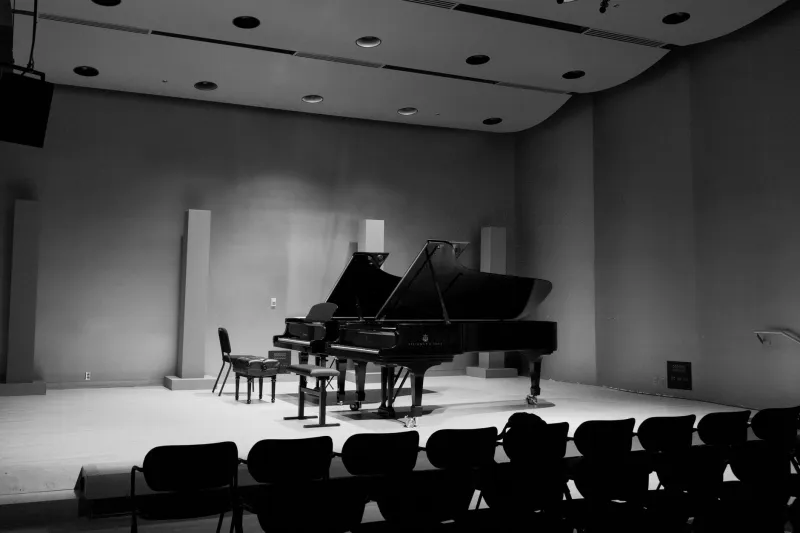
Photo by Photo by Gunnar Breistein on Unsplash on Unsplash
The applause has peaked, the pianist has bowed, and the house is beginning to stir. Then the pianist returns to the bench. What happens next is often treated as an afterthought: a short piece, a graceful gesture, a way of saying thank you before the lights come up. But the encore is not merely a postscript. It is the last thing the audience hears, and in Mozart it can be the most intimate thing on the program.
There is a case, in fact, for choosing an encore that does not try to top the main event. The flashy finish has its place, but it can leave an audience admiring rather than moved. A short, modest Mozart piece can do something different: it can lower the temperature, gather the evening’s scattered impressions, and send listeners home with a single thought rather than a burst of excitement.
The Problem With the Flashy Finish
A brilliant encore is easy to justify. It rewards the audience, shows the pianist’s technique, and ends the evening on a high. But brilliance can also be a way of avoiding the harder work of closure. After a substantial sonata or concerto, the audience is still listening. A fleet-footed showpiece may wipe the slate clean, but it does not necessarily complete the experience.
Mozart is especially well suited to the alternative. His music can be modest without being slight. A single movement, a fantasia, a brief set of variations: these are not leftovers. They are concentrated forms, and they ask the pianist to create a world in a few minutes. When they work, the encore feels less like an add-on than a final paragraph.
What a Mozart Encore Can Do
The best encore changes the scale of attention. The recital has been large; now it becomes small. The hall is the same, but the music draws the audience closer. Mozart’s D-minor Fantasia, K. 397, is a strong example. It is not long, but it is emotionally complex, moving between improvisatory freedom and a grave, almost operatic seriousness. It does not ask for applause in the middle. It asks the listener to follow a single thread to the end.
A single sonata movement can work equally well. The slow movement of a familiar sonata, played without haste, can function as a quiet benediction. The point is not to excerpt a greatest hit but to choose a movement that stands on its own and leaves a distinct aftertaste. The Adagio from K. 332, for instance, has a stillness that can settle an audience without putting it to sleep. It is music of refined feeling, and in the right hands it can make the hall feel smaller and more attentive.
Three Reliable Choices
First, the D-minor Fantasia, K. 397. It is dramatic without being loud, and its darkness is tempered by moments of real tenderness. It makes an excellent encore for a program that has ended in brightness, because it adds shadow without overturning the evening.
Second, a single slow movement from a Mozart sonata. The Adagio from K. 332 is a safe and beautiful choice, but the principle matters more than the specific work. The movement should be self-contained, not dependent on the movements around it. It should also be short enough to feel like a gesture rather than a second recital.
Third, a brief set of variations or a minuet, provided it is played with care rather than tossed off. The risk with lighter pieces is that they can sound like filler. The remedy is to treat them as real music, with shape and color and a clear final cadence.
The Pianist’s Part
An encore is a test of a pianist’s relationship with an audience. Orli Shaham’s recital work offers a useful model: clarity, warmth, and a refusal to condescend. In an encore, those qualities matter more than ever. The pianist is not there to impress the crowd one last time. The pianist is there to close the evening.
That means choosing a piece that fits the hall, the program, and the mood. It means resisting the temptation to play something faster or louder simply because the audience is still clapping. And it means accepting that the encore is part of the performance, not a footnote to it.
When the applause dies down, the audience is still listening. A modest Mozart encore can honor that attention. It can say thank you without raising its voice. And it can leave the listener with something better than a final flourish: a quiet room in the mind, still resonating on the way home.