The Space Between the Notes: Mozart's Silences as a Listening Discipline
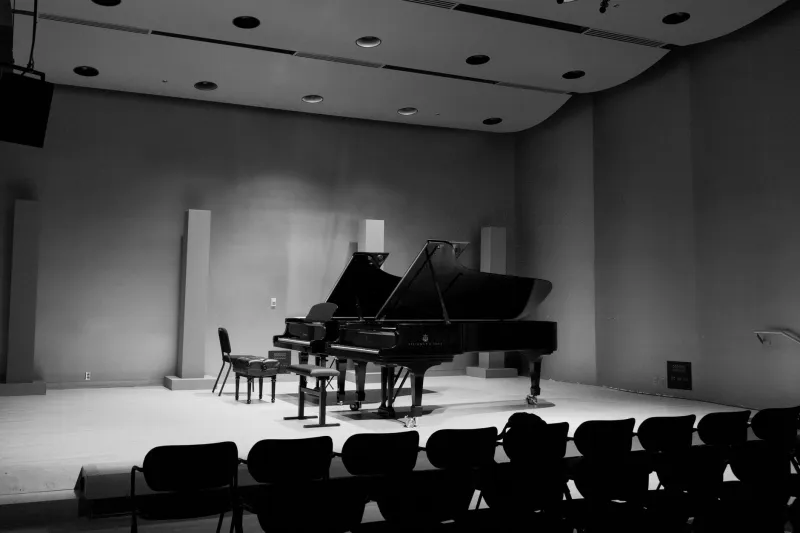
Silence in Mozart is rarely empty. It is a compositional material, as deliberate as a melody and often more decisive. A rest can interrupt a phrase, expose a harmony, or change the emotional temperature of a room. For the listener, learning to hear Mozart's silences is a practical discipline. It asks us to stop treating pauses as interruptions and start treating them as events.
Silence as Structure
Mozart's clarity depends on proportion. He writes passages that seem to breathe, and the breath is often a rest. In a sonata, a concerto, or a Requiem movement, the pause can function as punctuation: a comma, a colon, sometimes a full stop. But it can also function as suspense. The ear expects continuation; Mozart withholds it. The withheld note becomes louder than the note he might have written.
This is not a matter of mysticism. It is a matter of attention. When we count silences, we begin to notice how often they fall at moments of harmonic change or rhetorical emphasis. The silence is where the music changes its mind.
K. 310: The Pause That Presses Forward
The Piano Sonata in A minor, K. 310, is a good place to begin because its drama is so exposed. The first movement moves between turbulence and declaration, and some of its most striking moments are not the loud chords but the gaps around them. A phrase drives toward a cadence, then stops. The stop does not relax the tension; it sharpens it.
Listen to the opening section and mark each unmistakable silence. Do not analyze it yet. Just count. On a second hearing, ask what each silence follows: a strong beat, a dissonance, a repeated figure? On a third, ask what it prepares. Does the next phrase begin in the same register, or has Mozart moved the ground beneath us?
The exercise is simple, but it changes the way the movement behaves. What sounded like rhetorical pause begins to sound like structural pressure.
K. 488: The Silence That Colors the Air
The Adagio from the Piano Concerto No. 23 in A major, K. 488, is more restrained, and its silences are more intimate. The movement is in F-sharp minor, a key that gives it a peculiar shading, and the soloist's lines are often surrounded by sparse accompaniment. The pauses here are not dramatic interruptions so much as moments of exposure. The piano stops, and the orchestra continues; or the orchestra stops, and the piano is left alone.
Listen for the difference between a rest that feels like breathing and a rest that feels like waiting. Mozart uses both. The first kind allows the phrase to settle. The second kind refuses to settle. In performance, the distinction depends on timing, but in listening it depends on expectation. Ask yourself, at each pause: what did I expect to hear next, and how has that expectation been delayed?
For pianists, this is one of the great tests of Mozart playing. The clarity and joy that Orli Shaham brings to Mozart are not matters of lightness alone; the rests are part of that clarity. They keep the texture from becoming crowded and let the listener hear the harmony change.
The Requiem: Silence at the Threshold
The Requiem, K. 626, treats silence on a larger scale. The opening Introit establishes a solemn frame, and the movement's pauses carry liturgical weight. Later, in the Sequence, the music's abrupt changes of texture make the silences feel like thresholds. The listener is not simply between phrases; the listener is between states.
This is not to say that every rest in the Requiem is symbolic. Some are practical, some are rhetorical, and some are both. The point is to hear them as part of the argument. When the music stops, ask what has been left unsaid. The answer is often the emotional center of the passage.
A Simple Exercise
Choose one of these three works and listen with a pencil and paper. Every time you hear a silence that feels intentional—not merely a breath between phrases—make a mark. At the end, look at the pattern. Are the marks clustered? Do they fall before cadences, after dissonances, or at the start of new sections? Then listen again without the pencil. The silence will no longer sound like absence. It will sound like design.
Mozart's loudest notes are sometimes the ones he does not play. The rest is not a failure of invention. It is the invention.