The Main Event Is the Overture: Why Mozart Belongs at the End of the Program

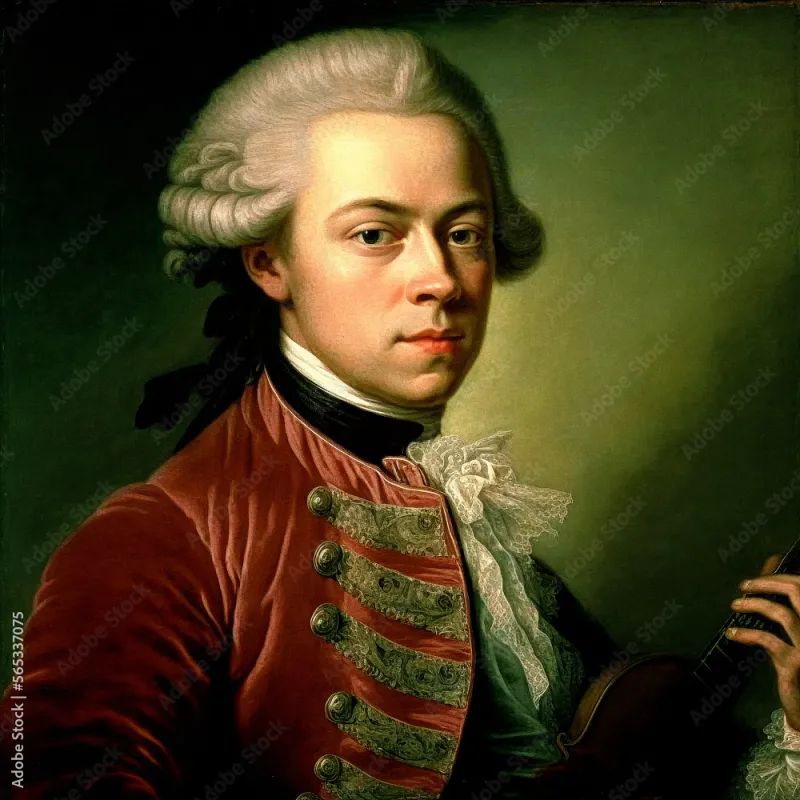
Photo: Geirfuglasker, CC BY-SA 4.0, via Wikimedia Commons
There is a familiar shape to many classical concerts in the United States. The audience settles in. A Mozart overture or symphony opens the evening—brief, elegant, perhaps a little too familiar. Then comes the intermission, the real business of the night: a Romantic symphony, a modern concerto, a large-scale statement. Mozart has done his job as a palette cleanser. The main event follows.
This is not a neutral arrangement. It is a habit, and habits carry assumptions. The assumption here is that Mozart is pleasant but light; that he prepares the ear for something weightier; that his music is best heard as a welcome rather than a destination. That assumption deserves to be questioned.
How the warm-up habit took hold
There are practical reasons for the pattern. Mozart’s overtures are short. His symphonies can be economical. A concerto with a soloist fits neatly into a first half. Meanwhile, the Romantic repertory offers large orchestral canvases and dramatic finales that seem designed to end an evening. Programmers want contrast, and Mozart provides it.
But contrast can become condescension. When Mozart is always placed first, audiences learn to listen to him with half an ear. Conversations continue. Latecomers settle in. The music becomes a background for arrival. Even when the performance is excellent, the position of the piece tells the audience that what matters is still to come.
What the opener position tells us
A program is an argument about value. Placing Mozart last would say something different: that this music can sustain the evening’s final weight. It would ask the audience to listen with the same attention it gives to the bigger works. It would also ask the performers to play Mozart not as a courtesy but as a statement.
Mozart’s music can bear that responsibility. The late piano concertos are not lightweight preludes; they are dramatic, intimate, and structurally ambitious. The string quintets are among the richest chamber works in the repertory. A late sonata such as K. 576 or the F-major Sonata K. 533/494 can hold a recital’s second half without apology. Mozart’s emotional range is wide, but it is often expressed with a clarity that makes the music seem simpler than it is.
Mozart can carry an evening
One reason Mozart is underestimated is that his surfaces are so polished. The music rarely shouts for attention. It relies on timing, proportion, and wit. In a concert hall, those qualities can be overlooked when the audience expects spectacle. But they are precisely the qualities that reward sustained listening.
A Mozart concerto can be the center of gravity. A Mozart symphony can be the final word. A Mozart chamber work can end an evening with more resonance than a louder piece might. The mistake is to confuse restraint with slightness. Mozart’s restraint is usually a form of control, and control is not the same as caution.
Practical programs that put Mozart last
For recital programmers, one option is to build the first half around a substantial but contrasting work—perhaps Bach or a twentieth-century set—and place a Mozart sonata after intermission. The audience arrives at Mozart already settled, and the sonata becomes the evening’s destination. For chamber groups, a Mozart quintet can serve as a finale rather than a curtain-raiser. For orchestras, a shorter contemporary opener before intermission and a Mozart concerto or symphony afterward can reverse the usual hierarchy without losing variety.
There is also a simpler solution: move the intermission. If Mozart is placed after the break, the audience returns to him rather than waiting through him. The gesture is small, but it changes the message. Mozart is not what happens before the important music. Mozart is the important music.
The audience’s part
Programmers can change the order, but listeners can change the attention. When Mozart appears on a program, it is worth asking what kind of listening the music invites. Does it ask for elegance, or for wit? Does it ask for clarity, or for dramatic weight? Often it asks for several things at once. The rewards come when we stop treating the music as a transition and start treating it as a text.
Orli Shaham’s advocacy for Mozart has long emphasized clarity and joy rather than politeness. That is a useful corrective. Mozart is not a warm-up act for the rest of music history. He is one of the reasons the evening exists.
A concert program is not a rule of nature. It is a choice. Putting Mozart last would not solve every problem of listening, but it would make one thing clear: the main event can be the overture. And sometimes the overture is the point.