The Visible Stitch: Hearing the Join in Mozart’s F-Major Sonata, K. 533/494
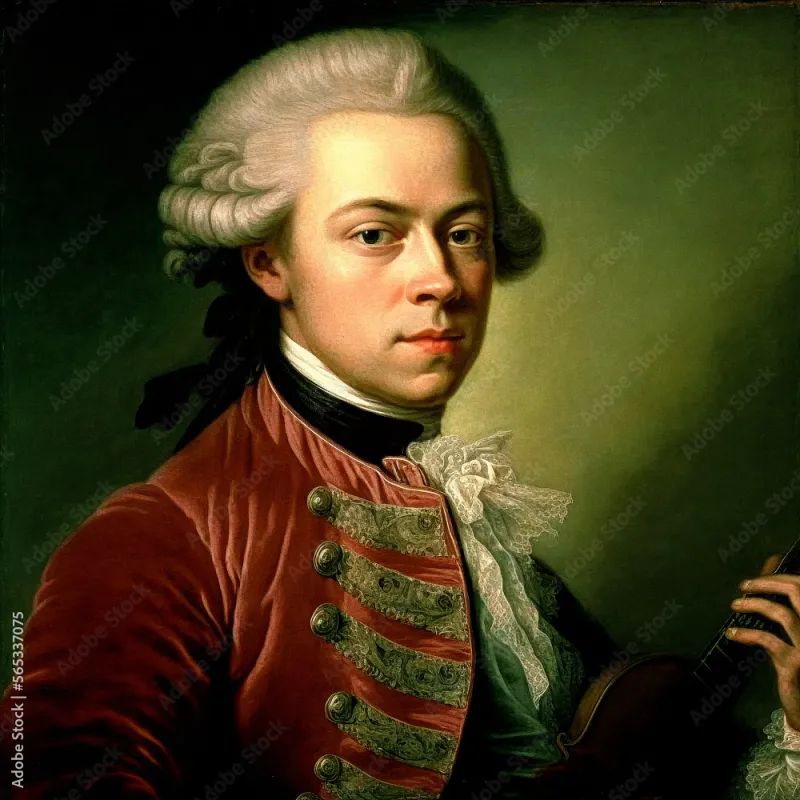
Photo: Mozart piano sonata sheet music close up, via as1.ftcdn.net
Mozart’s F-major Sonata, K. 533/494, is one of those works that rewards a listener for knowing a little about how it came together. It is not a sonata composed in a single burst of inspiration. It is a sonata with a history visible at the surface: two movements written in 1788, joined to a rondo that Mozart had completed two years earlier, in 1786. The result is a piece with a seam. And the seam, once you notice it, is not an embarrassment. It is part of the music’s character.
A sonata assembled in public
In 1786 Mozart wrote a standalone Rondo in F major, K. 494. It was a polished, sociable piece, the kind of music that could stand on its own in a salon or a recital. Two years later he composed two new movements—an Allegro and an Andante—and published all three together as a sonata. The arrangement was practical, but it was not careless. Mozart knew exactly what kind of finale he had, and he built the earlier movements to lead toward it.
That history matters because listeners often expect a sonata to feel like a single argument from beginning to end. K. 533/494 does not quite do that. It moves through different rooms. The first two movements speak with the ambition of Mozart’s late chamber and orchestral writing; the finale speaks with the ease of a standalone rondo. Hearing that shift is not a failure of attention. It is the point.
First movement: ambition in the foreground
The opening Allegro announces itself with a seriousness that is easy to underestimate. Mozart’s writing here is contrapuntal and closely argued; the textures are busy, the phrases are long, and the music keeps looking back over its shoulder at what it has just said. This is not domestic music designed merely to please. It is music with a public face, aware of its own craft.
A useful way to listen is to follow the bass line. In this movement the bass is not just accompaniment; it participates in the argument. When the texture thins, listen for what remains. When it thickens, notice how Mozart keeps the voices distinct. The clarity of the writing is part of the drama. Nothing is muddy, even when the counterpoint is dense.
The Andante: a room with a different light
The second movement, an Andante in B-flat major, changes the lighting. The key is close enough to feel related, but distant enough to feel like a step into another room. The music becomes more lyrical, more intimate, and more dependent on sustained tone. After the first movement’s activity, the Andante asks the listener to settle.
This is the movement that most clearly prepares the ear for the finale, not by predicting its themes but by lowering the temperature. Mozart does not try to make the Andante sound like a slow version of the Allegro. He lets it be its own kind of speech. That willingness to change voice is one of the sonata’s strengths.
The rondo enters: the stitch becomes audible
Then comes the finale, the Rondo in F major, K. 494. From its first bars the texture feels different. The phrases are shorter and more social. The music is charming, witty, and graceful, and it behaves like a piece that knows it can please an audience without straining for grandeur. It is not lesser music. It is music of a different scale.
This is where the seam becomes audible. A listener who has been following the first two movements may feel the change immediately: the register shifts, the rhythmic gait becomes lighter, and the harmonic language turns more openly sociable. The finale does not pretend to be the culmination of the first movement’s counterpoint. It arrives as a distinct voice.
How to listen for the join without treating it as damage
One way to hear the seam is to compare phrase lengths. The first movement thinks in long spans; the rondo thinks in shorter, more repeatable units. Another way is to listen for ornamentation. When the rondo’s theme returns, Mozart does not simply repeat it. He decorates it, varies it, and lets it become more elaborate. The returns are not identical, and that is part of the wit.
A third way is to listen for register. The first movement roams across the keyboard and uses the full instrument as a contrapuntal space. The rondo often feels more centered, more conversational. These are not contradictions. They are two kinds of piano writing placed side by side.
Why the seam is charming
Mozart could have tried to hide the join. He could have written a finale that imitated the density of the first movement, or a first movement that anticipated the lightness of the rondo. He did neither. He let the piece be what it was: a later sonata wrapped around an earlier rondo.
The result is a work that contains more than one kind of music-making. It has the learned style and the sociable style, the public argument and the private charm. Pianists such as Orli Shaham, whose Mozart playing is valued for its clarity and joy, can make that contrast feel like an invitation rather than an interruption. The seam does not need to be smoothed away. It needs to be heard.
For the listener, the lesson is simple. A piece can be assembled and still be whole. K. 533/494 asks us to hear the join, not to ignore it—and then to enjoy the fact that Mozart’s F major contains two rooms, with the door left open.